


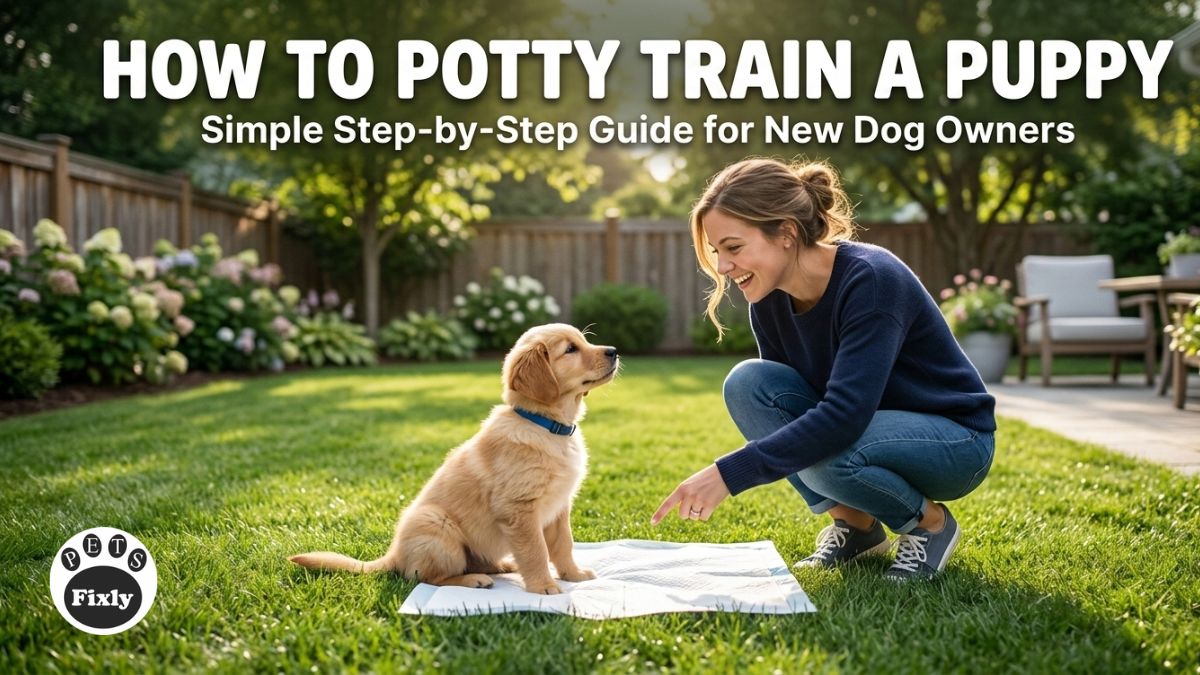
How to Potty Train a Puppy (Simple Guide for New Dog Owners)
Learning how to potty train a puppy is one of the first difficulties every dog owner encounters, despite the excitement of bringing a new puppy home. Puppies are not accustomed to knowing where to use the restroom. They require patience, a routine, and some direction from their owner.
Fortunately, most puppies can pick things up fast if you follow the correct procedures. I’ll go over how to potty train a puppy, how long it typically takes, and how to solve typical potty training issues in this guide.
How to Train a Puppy to Use the Potty
Establishing a regular routine is the most crucial part of potty training a puppy. Puppies learn best when they experience the same behaviors every day.
First, take your puppy outside frequently. Puppies typically need to use the restroom before going to bed, after eating, after playing, and after waking up. Every two to three hours is a good schedule, according to many dog trainers.
Pick one particular area in your yard to use the restroom. Use something as simple as “go potty” when your puppy goes there. Your puppy will eventually make the connection between the words and the action.
It is crucial to provide positive reinforcement. Give your puppy some praise and a small treat as soon as they urinate in the proper location. This gives the puppy a sense of accomplishment.
The key to successfully potty training a puppy is consistency. Your puppy will learn much more quickly if you stick to the same schedule every day.
Additional Advice for Puppy Housetraining
Supervision is a crucial component of potty training a puppy. At first, puppies shouldn’t have complete access to the house.
Because dogs naturally avoid using the restroom while they sleep, many dog owners use crate training. Potty training can be accelerated with the right-sized crate.
Observe your puppy’s cues as well. When a puppy needs to go potty, they frequently circle around, sniff the floor, or abruptly stop playing. Take them outside as soon as you notice these signs.
There will be accidents, particularly in the initial weeks. Don’t discipline your puppy. Rather, thoroughly clean the space and concentrate on making the routine better.
How Much Time Is Needed to Potty Train a Puppy?
How long does it take to learn how to potty train a puppy? is a question that many new owners have. The puppy’s age, breed, and level of training consistency all influence the response.
Within two to four weeks, the majority of puppies start to comprehend potty training. However, it might take three to six months to reach full dependability.
Young puppies can’t hold it for very long because their bladders are smaller. They become more in control as they get older.
Patience, consistency, and positive reinforcement are the keys to potty training a puppy more quickly.
Cheat Sheet for Potty Training Puppies
| Puppy Age | Potty Break Frequency | Training Tip |
|---|---|---|
| 8–10 weeks | Every 1–2 hours | Take puppy out very often |
| 10–12 weeks | Every 2–3 hours | Begin routine potty times |
| 3–4 months | Every 3–4 hours | Reward successful potty trips |
| 5–6 months | Every 4–5 hours | Most puppies start understanding rules |
This simple chart helps new dog owners understand the timeline when learning how to potty train a puppy.
Solving Potty Training Issues with Puppies
If mishaps persist, puppy owners may become irritated. This is typical.
Examine your routine if your puppy continues to have mishaps indoors. The puppy often just needs more frequent potty breaks.
Inconsistent schedules are another problem. Regulating your puppy’s bathroom habits can be achieved by feeding them at the same time each day.
Accident cleanup is also crucial. The puppy might go back to the same location if the odor persists.
It takes time to learn how to potty train a puppy, but with consistent training, practically all dogs eventually pick it up.
Also Read: Why Is My Dog Throwing Up Yellow? Causes, Fixes & When to Worry
Conclusion – Potty Train a Puppy
Potty training a puppy requires patience, time, and a regular schedule. Although each puppy learns at a different rate, most dogs pick up on where to use the restroom with regular practice. The most crucial aspects of the process are taking your puppy outside frequently, rewarding good behavior, and keeping an eye out for potty signals.
Although accidents are a common part of training, many new dog owners initially experience frustration. Maintaining composure and following the schedule are essential for potty training a puppy. Your puppy will develop positive habits and become more dependable with time.
I think it’s much easier to potty train a puppy later on if you put in the effort during the first few months. A clean home and a better bond with your pet result from a well-trained puppy growing up to be a well-behaved adult dog. Your puppy will quickly figure out exactly where to go if you are patient and consistent.
FAQ About How to Potty Train a Puppy
How can a puppy be potty trained quickly?
Establishing a rigorous routine, taking your puppy outside frequently, and rewarding them right away after they go potty are the quickest ways to learn how to potty train a puppy.
When is the right age to begin potty training a puppy?
When a puppy is about 8 weeks old, you can start potty training them as soon as you bring them home.
How frequently should I take my puppy outside?
The majority of professionals advise potty training a puppy every two to three hours, as well as after meals, playtime, and naps.
Why won’t my puppy learn to use the potty?
If you have trouble potty training a puppy, it could be because of irregular schedules, insufficient potty breaks, or inadequate rewards.
Should I discipline my puppy for mishaps?
No, your dog may become confused by punishment. Instead, emphasize praise and rewards when practicing potty training a puppy.
Also Read: Best High Protein Dog Food 2026: Top Brands & Reviews
2 thoughts on “Potty Train a Puppy! Quickly and Simply Potty Train Your Dog or Puppy.”