


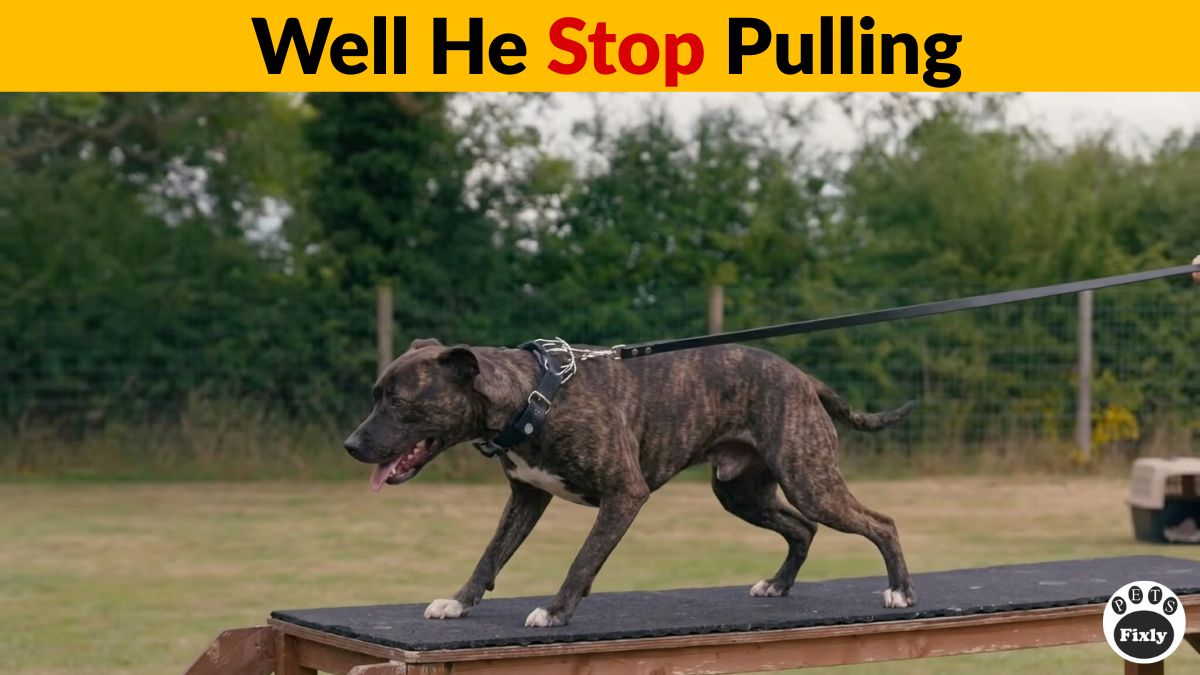
Fix Leash Pulling in 10 Minutes
Check it out, folks. In today’s video, I’m going to show you how to fix your dog from pulling you out the front door, dragging you down your stairs, acting like a clown. And I’m telling you, we’re going to fix it in less than five or 10 minutes. And you can, too.
As you can see, whether it’s chickens in your front yard, your neighbor’s cat, or other dogs, the techniques we’re going to show you are going to help you solve this problem in as little as 5 to 10 minutes. 100% guaranteed. Regardless of your dog’s age, the breed, the issue, or the temperament, we’re going to get it fixed.
Now, this is Sky. She’s a 5-month-old Belgian Malinois, and she’s been in our program about a week. But today is the day we made the decision. The BS has to stop. It is time for her to walk like a beautiful young lady on the leash, give me the attention that I deserve, and stop being reactive towards other dogs.
Right now, she’s not a mean thing. This is all play drive. This is prey drive. There’s a little too much excitement and energy, and it’s only going to get worse from here unless we stop it today. When I’m telling you stop it today, I mean right now.
We’re going to have it fixed, and then we’re going to go back through and show you what it looks like with a before and an after. And that’s happening right now.
Step 1: The Corrective U-Turn
So, three-step process. The first step is what we call a corrective U-turn.
I’m going to demonstrate it on the flat collar and show you what the technique is. But more importantly, the technique depends on the dog. The issue we’re going to run into is that this tool is not enough for her. She’s too strong of a personality, too much dog.
What we’re going to do now is prep her for the correction. That’s going to be a tap, and I’m going to walk back and pay her. Yes. When you feel that tap on the leash, it means I have something good for you. This is prepping her for the correction.
Now we wait for it. Bang. She gets popped. Come on back.
Now that’s enough prep work. We’ve already done that prep work with her. Now we’re going to go ahead and really throw in a heavy correction.
If she looks at me or she’s in the sweet spot, she’ll get paid. But if she’s out front like this, she’s not getting paid. So it’s a pass-fail type of situation. She can either win or she’s going to get corrected.
So that’s the corrective U-turn. It has to be done when the dog is out in front of you and not looking at you.
If your dog doesn’t take food out on the walk, that’s fine. You don’t have to do this with food. It’s just if you can, great.
If you’re in the sweet spot, yes, you will get paid. If you’re messing up, you’re going to get corrected.
Introducing the Prong Collar Properly
We’re going to step up to a firmer correction using a prong collar.
When you hook the prong collar up, you have a choice of single hooked or double hooked. Double hooked means you’re hooked to the prong collar and also backed up to another collar.
This serves two purposes. If the prong collar comes apart, you’re still backed up. It also means when I deliver the correction, she’s only getting about 50% of the power. So it’s introducing it without full power.
Now the stakes are high. If you go out of bounds, you will get corrected.
You’re going to see the transformation happen in the next one or two corrections. She’ll stop getting out in front. She’s already starting to check in more.

Step 2: The Stop and Pop
Now we move to stage two, called the stop and pop.
We wait until she’s not looking, then stop and pop. A little spicy, a little hard.
What’s happening is she’s distracted, then suddenly feels the correction when I stop. It’s nothing personal. I’m not mad. I don’t talk to her or warn her.
It’s a simple pass-fail game. If I stop and you stop, you get paid. If I stop and you don’t, you get corrected.
Now we’re looking for small moments where we can stop when she’s not paying attention and deliver that correction.
You’ll see she’s no longer two or three feet out. She’s right next to me or behind me. I’m not pulling her back. The leash stays loose.
Generalizing Around Dogs and Distractions
Now we use the same techniques around distractions.
If she gets four or five feet out, we do a corrective U-turn. If it’s only one or two feet, we do the stop and pop.
Watch her eyes. She’s starting to make better decisions. Not perfect yet, so no reward.
We keep the standard high and take every opportunity to correct or reward based on her behavior.
Working Around Chickens and High Prey Drive
Now we deal with chickens.
If she gets one or two feet out, I can stop and pop. If she tries to chase, I do a U-turn.
We’re teaching her she can’t chase chickens. It’s not personal. If she runs out of leash, it doesn’t feel good. If she doesn’t like that feeling, she stops doing it.
If she likes getting paid, she stays in the sweet spot.
Now she’s trying to keep an eye on both me and the chickens. That’s why she stays behind me more.
When she makes a good decision, she gets paid.
Real-Time Transformation
This is already a world of difference.
She’s checking in more, staying closer, and making better choices.
Was it a little hard on her? Yes. But she’s going to bounce back. It’s not personal. There’s no yelling.
She’s just learning there are rules now. And she’s making better decisions.
Just like that.
1 thought on “How to Stop a Dog from Pulling on the Leash in 5 Mint”