


How Do Dogs Get Tick Fever? A Simple Guide for US Dog Owners
If you own a dog in the US, you may be wondering how tick fever affects dogs. This is a frequently asked question, particularly in the spring and summer when ticks are prevalent. Many pet owners are initially unaware of the symptoms of tick fever, which can cause serious illness in their dogs.
Tick fever, to put it simply, is a disease that dogs contract through tick bites. Although it sounds frightening, you can safeguard your pet if you know how it occurs.
What Is Tick Fever in Dogs?
Bacteria that enter a dog’s body after a tick bite is typically the cause of tick fever. A bacterium known as Ehrlichia is one of the most frequent causes in the United States. The illness is frequently referred to as ehrlichiosis.
Once more, what causes tick fever in dogs? When an infected tick bites a dog and remains attached for a sufficient amount of time, the bacteria is transferred into the dog’s bloodstream. Your backyard, a park, a hiking trail, or even a suburban neighbourhood could be the scene of this.
Ticks are not just a “country problem,” as I always explain to dog owners. Dogs may be exposed to ticks in grassy areas even in urban areas like New York City or Los Angeles.
How Do Dogs Get Tick Fever From Ticks?
Let’s dissect it in a straightforward manner.
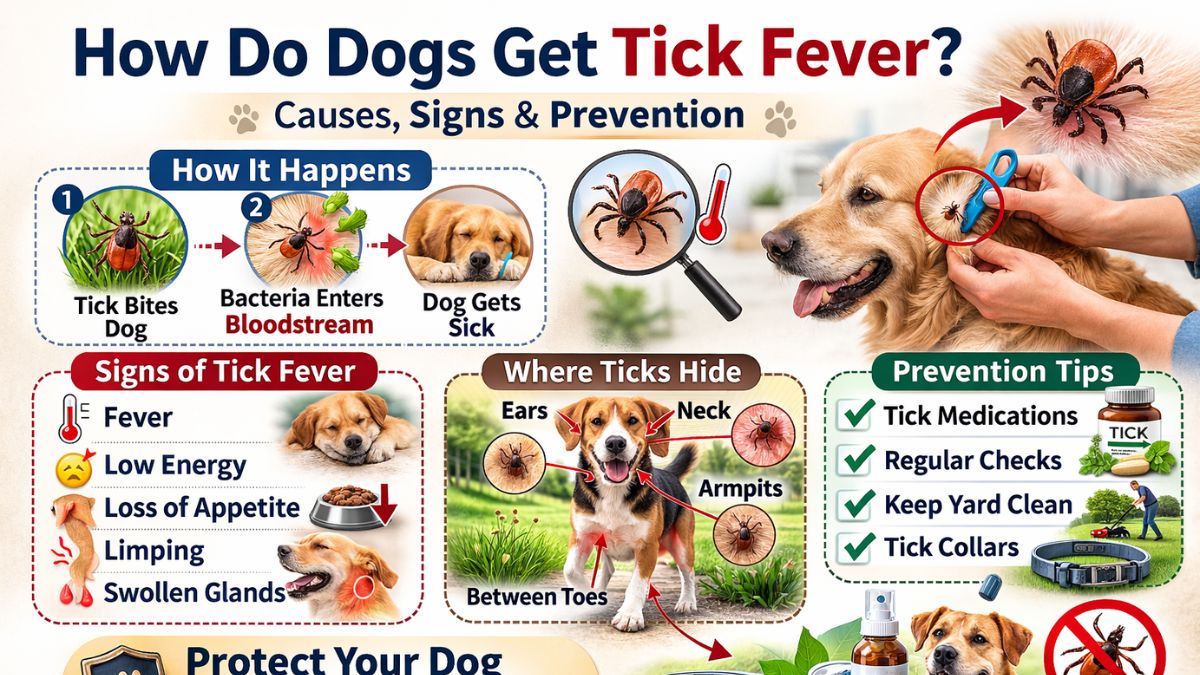
A tick first affixes itself to your dog’s skin. Ticks typically hide in wooded areas, bushes, or tall grass. The tick leaps on and begins feeding on blood as soon as your dog passes.
Second, your dog may contract bacteria from that tick if it is infected. Dogs contract tick fever in precisely this manner. The risk increases with the length of time the tick remains attached. Transmission often takes several hours to occur.
This is the reason it’s so crucial to check on your dog every day. Tick fever may be avoided if the tick is removed as soon as possible.
Where Do Dogs Get Exposed?
Because they don’t live close to a forest, many people believe their dog is safe. To be honest, though, ticks are practically ubiquitous in the United States.
Backyards, dog parks, hiking trails, and even camping excursions can expose dogs. Tick populations tend to be higher in states with warm temperatures and high humidity. Although tick-related issues are more common in states like Florida and Texas, tick fever cases occur nationwide.
The answer to the question of how dogs contract tick fever is straightforward: infected ticks found in regular outdoor settings.
Signs Your Dog May Have Tick Fever
Knowing the symptoms of tick fever is the next step after understanding how it affects dogs.
Fever, exhaustion, appetite loss, enlarged lymph nodes, and joint pain are a few typical symptoms. Some dogs may appear weak or limp. In severe situations, they might experience weight loss or bleeding issues.
The problem is that symptoms might not appear immediately. Weeks may pass after the tick bite. For this reason, many owners do not associate the disease with a tick.
Trust your instincts if your dog behaves “not like themselves.” Early veterinary care, in my opinion, saves lives.
How Can You Prevent Tick Fever?
Preventing tick fever is the best course of action. We can prevent the issue before it arises because we know how dogs contract tick fever.
Use tick prevention products that have been approved by veterinarians. These consist of tick collars, chewable tablets, and topical treatments. Try to stay away from tall grass and keep your yard trimmed.
Examine your dog’s ears, neck, belly, and between the toes after each walk. Ticks adore secret locations. A two-minute check can have a significant impact.
When to See a Vet
Contact your veterinarian immediately if you think you may have tick fever. To verify the infection, the veterinarian might perform blood tests. Antibiotics are typically used in treatment, and many dogs who receive treatment early fully recover.
However, tick fever can become dangerous if left untreated. For this reason, it is crucial for all pet owners in the United States to understand how dogs contract tick fever.
Also Read: Ringworm Dog Hair Loss Mange: Causes, Signs & Treatment
Concluding Remarks
What causes tick fever in dogs, then? The straightforward solution is through tick bites, which frequently occur during regular outdoor activities. The good news is that you can protect your dog if you are aware, take preventative measures, and act quickly.
As a dog lover, I firmly think that prevention is always simpler than cure. Your best friend can avoid a great deal of suffering tomorrow with a little care today.
1 thought on “How Do Dogs Get Tick Fever? Signs & Prevention Guide”