
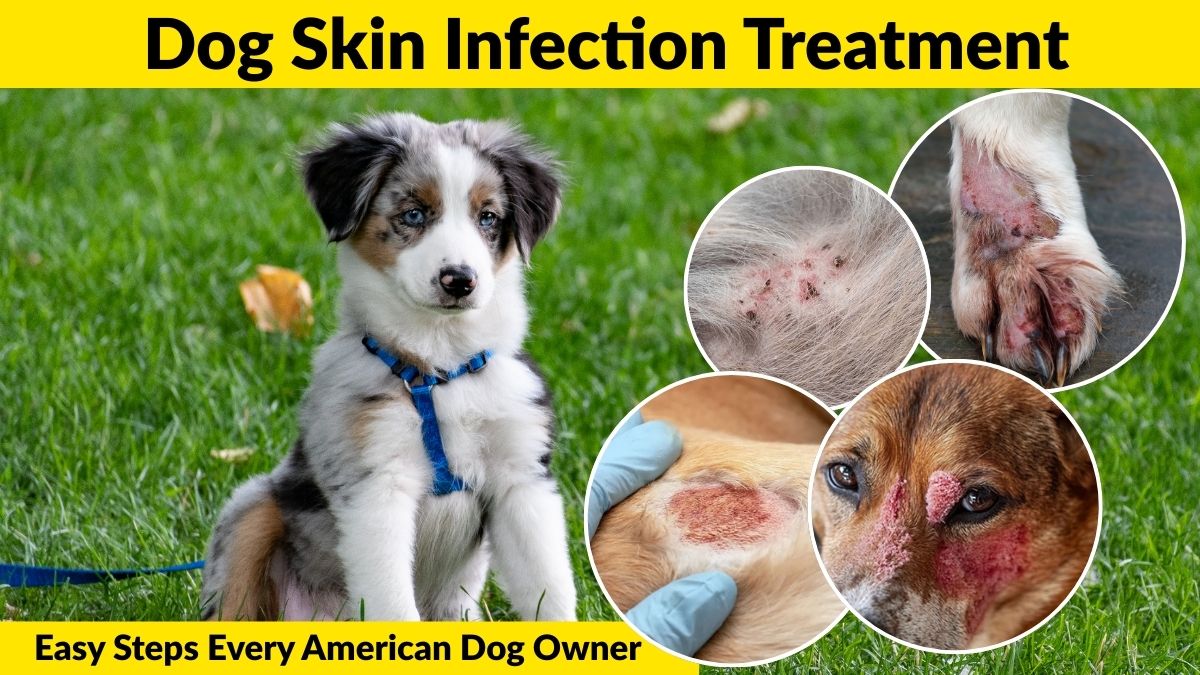
Dog Skin Infection Treatment: Easy Steps Every American Dog Owner Should Know
If you are a dog owner in the United States, you are aware of the stress that comes with your pet’s constant scratching. Your dog may require treatment for a dog skin infection if they exhibit red skin, bumps, foul odor, or hair loss. The good news is that, with early intervention, the majority of skin infections are curable.
In this article, I will explain dog skin infection treatment in very simple American English, so you can understand what to do and when to call your vet.
What Causes Skin Infections in Dogs?
Dog skin infections are typically caused by bacteria, yeast, fleas, allergies, or moisture that gets trapped in the skin. Hot, muggy weather increases the likelihood of skin issues in many states, such as Florida and Texas. Allergies can cause infections even in arid states like Arizona.
For instance, if your dog has allergies and continues to lick their paws, the moisture may cause an infection. At that point, it becomes crucial to treat dog skin infections properly.
Signs Your Dog Needs Dog Skin Infection Treatment
There are instances when the signs are obvious. Your dog might constantly rub up against furniture or scratch. You may observe oily skin, pimples, scabs, or red spots. Some dogs even start to smell strongly.
Waiting too long is, in my opinion, the biggest error made by dog owners. It is always simpler and less expensive to treat a dog skin infection early on rather than after it has become severe.
Don’t wait if your dog appears to be in pain or if the skin appears swollen or bleeding. For advice on locating appropriate care, consult a licensed veterinarian or go to reputable associations such as the American Veterinary Medical Association.
Home Remedies for Mild Cases
Your veterinarian might recommend medicated shampoos for extremely mild cases. Itchy skin can be relieved by taking oatmeal baths. Basic treatment for dog skin infections also includes keeping your dog clean and dry.
But don’t use any random human creams, please. I’ve observed that a lot of pet owners use leftover human antibiotics, which can exacerbate the situation. Before beginning any at-home treatment for a dog skin infection, always consult your veterinarian.
Veterinary Dog Skin Infection Treatment Options
Your veterinarian may recommend antibiotics, antifungal drugs, or medicated sprays if the infection is moderate or severe. They occasionally advise allergy testing as well.
To determine the precise cause, veterinarians in many American clinics will perform a skin scrape test. Instead of making a guess, this helps them select the best treatment for dog skin infections.
Special diets or allergy shots may be used as a long-term treatment for dog skin infections if allergies are the underlying cause. Veterinarian-recommended brands frequently adhere to the American Kennel Club’s recommendations for general dog health.
How Long Does Dog Skin Infection Treatment Take?
The majority of minor infections get better in 7–14 days. In severe cases, it could take weeks. Consistency is crucial. Follow the directions and finish the entire dog skin infection treatment, even if your dog appears better.
In the USA, stopping treatment too soon is a common error, particularly when hectic schedules interfere. However, if a dog skin infection is not fully treated, it may recur more strongly.
How to Prevent Future Skin Infections
Treatment is never as good as prevention. Treatment for dog skin infections can be avoided in the future with regular grooming, a healthy diet, and flea control.
Make sure your dog is completely dry if they frequently swim. Work with your veterinarian to modify their diet if they have food allergies. Simple actions now can save you hundreds of dollars later on when treating a dog skin infection.
When to See a Vet Immediately
Emergency dog skin infection treatment is required if your dog is experiencing severe pain, pus, large open sores, or fever. Serious complications may arise if care is delayed.
Trust your gut as a responsible pet owner in the United States. If something doesn’t feel right, it most likely does.
Also Read: What’s the Best Fresh Pet Dog Food?
Concluding Remarks
Skin issues in dogs are common, but they are treatable. Early treatment of dog skin infections and appropriate veterinary advice are crucial. Your dog can return to being content, energetic, and itchy with the correct care.
Your dog’s health can be greatly improved by acting promptly, heeding your veterinarian’s advice, and continuing to treat dog skin infections consistently.
FAQ About Dog Skin Infection Treatment
What is the best at-home remedy for skin infections in dogs?
Medicated shampoo and maintaining cleanliness may be helpful for mild cases. However, before beginning at-home treatment for a dog skin infection, always get confirmation from a veterinarian.
How can I determine whether my dog requires expert treatment for a skin infection?
Professional dog skin infection treatment is required if symptoms worsen, persist for more than a few days, or involve pus and swelling.
Can allergies necessitate treating dog skin infections over an extended period of time?
Yes, your dog may require continuous treatment for skin infections in addition to allergy management if allergies are the cause.
Is it costly to treat dog skin infections in the United States?
Early treatment for dog skin infections is typically far less expensive than emergency care, though costs vary by state and severity.
How can I avoid having to treat my dog’s skin infection again?
Treatment for dog skin infections can be avoided with regular grooming, flea control, a healthy diet, and prompt action when irritation occurs.
1 thought on “Easy Dog Skin Infection Treatment Guide for American Pet Owners”