
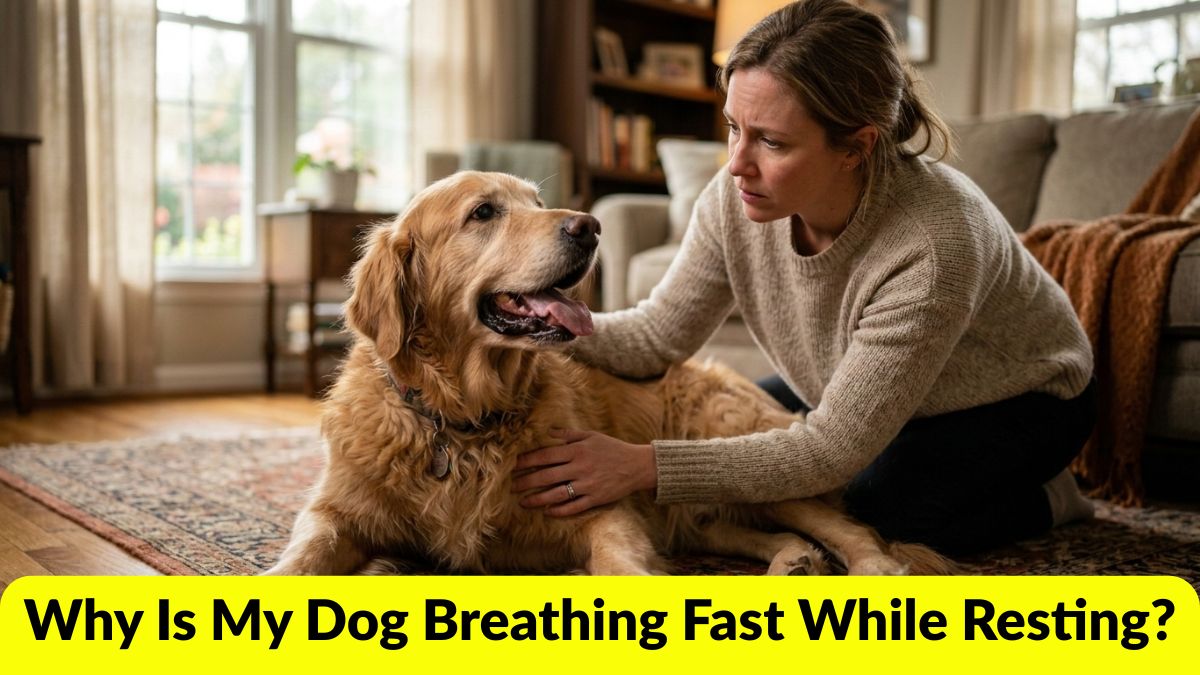
Dog Breathing Fast While Resting (2026 Guide): Causes, Signs, and What to Do
It can be frightening if you see your dog breathing quickly while at rest. When their dog lies down but continues to breathe rapidly, many American dog owners become concerned. It is normal in certain situations. However, a dog’s rapid breathing while at rest may occasionally indicate a serious health issue.
This updated 2026 guide will explain why dogs breathe quickly while at rest, what symptoms to look out for, and when to call your vet.
What Is Dog Breathing Fast While Resting?
When at rest, a healthy dog typically breathes 15 to 30 times per minute. Your dog may be experiencing fast breathing, also known as tachypnea, if you count more than thirty breaths per minute while they are sleeping or unwinding.
When a dog occasionally breathes quickly while at rest, it might not be harmful. For instance, your dog might breathe rapidly while dreaming, after playing, or in hot weather. On the other hand, if a dog breathes quickly while at rest for an extended period of time or frequently, it may be a sign of a health problem.
Counting your dog’s breaths while they sleep is something that many veterinarians advise. Knowing what is typical for your pet is made easier by this.
Common Causes of Dog Breathing Fast While Resting
Dogs may breathe quickly while at rest for a number of reasons. While some are not life-threatening, others may be.
Heat Stroke
Overheating is one of the most frequent causes of dogs breathing quickly at rest. Unlike humans, dogs do not perspire. Rather, they use panting to cool themselves.
A dog’s breathing quickens when it gets too hot. Drooling, weakness, vomiting, and a body temperature higher than 103°F are indicators of heat stroke.
Pugs, Bulldogs, Boxers, Boston Terriers, Shih Tzus, and Lhasa Apsos are among the breeds with flat faces that are more susceptible to heat stroke. Due to their short noses, these dogs already have breathing difficulties.
Many owners, in my opinion, underestimate how quickly heat stroke can occur, particularly in hot American summers or when their cars are parked.
Lung Fluid
Fluid accumulation in the lungs is another reason why dogs breathe quickly when at rest. Pulmonary edema is another name for this condition.
Your dog has a harder time getting oxygen when fluid builds up in their lungs. Your dog will therefore breathe more quickly to make up for it.
Blue or pale gums, coughing, weakness, and breathing difficulties are possible additional symptoms. Veterinary care is urgently needed in this situation.
Heart Failure
Another common reason why dogs breathe quickly while at rest is heart issues. The body gets less oxygen when a dog’s heart is unable to pump blood effectively.
The dog starts breathing more quickly to make up for it. Coughing, fatigue, and decreased exercise tolerance are frequently associated with dogs’ rapid breathing while at rest due to heart disease.
Regular veterinary examinations are crucial as dogs age because heart disease is more common in older dogs.
Anemia
When your dog’s red blood cells are insufficient, anemia develops. Oxygen is transported throughout the body by red blood cells.
The body responds to a decrease in oxygen by accelerating breathing. For this reason, a dog’s rapid breathing while at rest may indicate anemia.
Pale gums, exhaustion, weakness, and appetite loss are typical symptoms. Certain types of anemia may be more common in some breeds, including Shih Tzus, Cocker Spaniels, Labrador Retrievers, and Miniature Schnauzers.
Anemia in dogs can also be caused by diseases carried by ticks.
Garlic or Onion Poisoning
In the United States, a lot of dog owners enjoy giving their pets table scraps. Unfortunately, dogs are poisoned by foods like garlic and onions.
Consuming a lot of onions or garlic can harm red blood cells and result in hemolytic anemia, which can cause a dog to breathe quickly when at rest.
Vomiting, diarrhea, drooling, weakness, and appetite loss are additional symptoms.
Avoiding human leftovers is, in my opinion, one of the simplest ways to keep your dog healthy.
Lung Conditions
Dogs with respiratory conditions may also breathe quickly when at rest. These include lungworms, pneumothorax, tracheal collapse, pneumonia, and bronchitis.
Your dog’s ability to breathe normally is hampered by these conditions that affect the lungs or airways. To diagnose these issues, your veterinarian might suggest X-rays or other tests.
What To Do If Your Dog Is Breathing Fast While Resting
Keep your cool and pay attention to your dog if you see them breathing quickly while they are sleeping.
Look for signs of overheating or recent exercise. It is best to call your veterinarian if the breathing does not slow down after a few minutes.
It’s crucial to act quickly if heat stroke is suspected. Move your dog to a cool spot and use airflow and a damp towel to gently cool them. After that, bring your dog to the closest vet.
In order to identify the cause of a dog’s rapid breathing while at rest, veterinarians will typically conduct a physical examination and may suggest tests like chest X-rays, blood tests, or an echocardiogram.
The success of treatment can be greatly impacted by an early diagnosis.
How to Prevent Dog Breathing Fast While Resting
Many causes of dogs breathing quickly while at rest can be prevented, but some medical conditions cannot.
In warm weather, always supply fresh water and shade. Steer clear of exercising your dog in the hottest part of the day.
Even if the windows are slightly open, you should never leave a dog inside a parked car. In just a few minutes, temperatures inside cars can rise dangerously.
Additionally, give your dog premium dog food rather than human leftovers. This lessens the risk of exposure to toxic foods like onion poisoning.
Additionally, early detection of lung issues, anemia, or heart disease depends on routine veterinary examinations.
Cost of Treating Dog Breathing Fast While Resting
The underlying cause of a dog’s rapid breathing while at rest determines the cost of treatment.
For instance, in the US, the cost of treating onion poisoning can range from $900 to $1,200. If hospitalization is necessary, severe heat stroke cases can cost anywhere from $3,000 to $5,000 or more.
Many families find that pet insurance helps them deal with unforeseen veterinary costs.
In conclusion
Although it can be concerning to witness a dog breathing rapidly while at rest, you can take prompt action if you are aware of the potential causes. It may indicate major health problems like heart disease, lung issues, or heat stroke, but it can also be benign at times.
The best strategy, in my opinion, is straightforward: pay close attention to your dog’s breathing patterns and never disregard them. The safest course of action is always to consult your veterinarian when in doubt.
Your dog’s life can be saved by taking prompt action.
Also Read: Potty Train a Puppy! Quickly and Simply Potty Train Your Dog or Puppy.
FAQ About Dog Breathing Fast While Resting
Why does my dog breathe quickly when at rest?
Heat stroke, heart disease, lung issues, anemia, poisoning, or respiratory infections can all cause a dog to breathe quickly while at rest. Persistent symptoms should be assessed by a veterinarian.
Is it normal for a dog to breathe quickly when at rest?
If your dog has just worked out or is dreaming while they sleep, it can occasionally be normal for them to breathe quickly while at rest. However, a veterinarian should be consulted if you consistently breathe quickly.
When should I be concerned about my dog’s rapid breathing while at rest?
See a veterinarian right away if your dog’s rapid breathing while at rest lasts longer than a few minutes, happens frequently, or is accompanied by weakness, coughing, or pale gums.
Can a dog breathe quickly while at rest due to heat?
Yes, especially in the sweltering summer months, overheating is a common reason why dogs breathe quickly while at rest.
What is a dog’s typical breathing rate per minute?
When at rest, the majority of healthy dogs breathe 15 to 30 times per minute. A dog may be breathing quickly while at rest if it takes more than 30 breaths.
Also Read: