
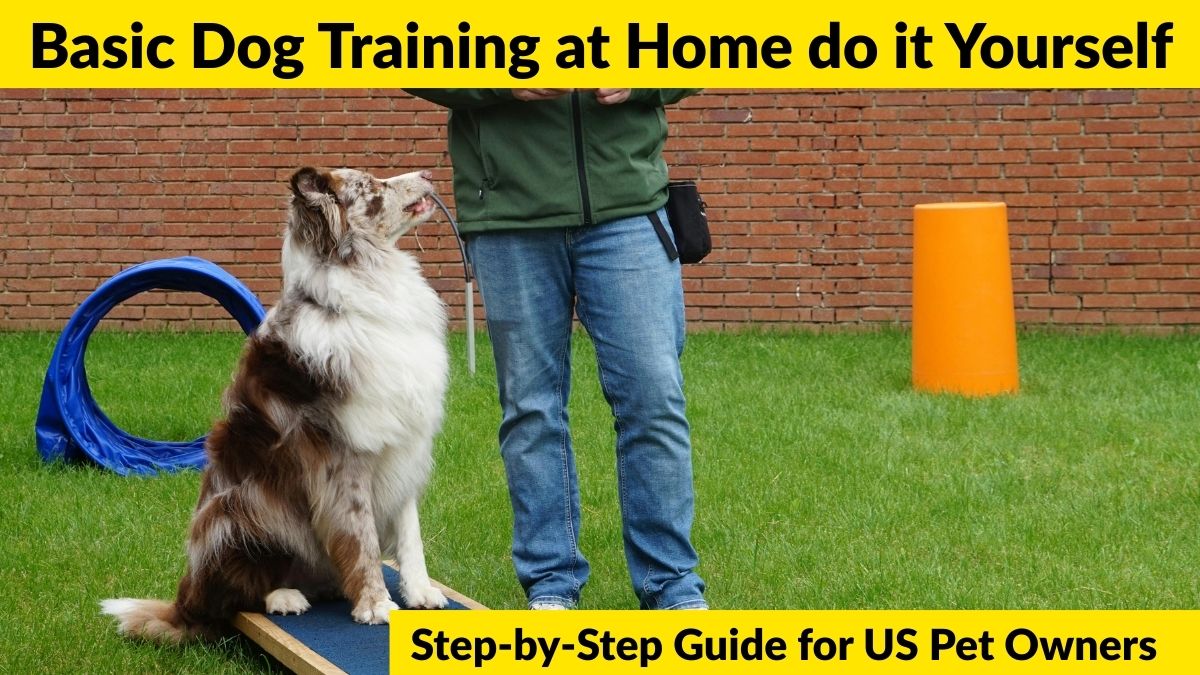
Basic Dog Training at Home: A Simple DIY Guide for American Dog Owners
It’s exciting to bring a new dog into your house. To be honest, though, it can also be stressful. Dogs require supervision when they bark at night or chew on your favorite shoes. The good news is that you can begin without an expensive trainer. With time, patience, and love, any dog owner in the United States can learn basic dog training at home.
I think that training your dog yourself strengthens your relationship with them. You learn how your dog thinks, and your dog learns to trust you. It’s a strong connection. With the help of this guide, you can learn basic dog training at home in an easy-to-follow manner.
Why Basic Dog Training at Home Is Important
Dogs don’t know house rules from birth. They don’t know why shoes aren’t chew toys or what a couch is used for. Basic at-home dog training teaches them how to coexist peacefully and safely with your family.
Dogs are treated like members of the family in many American homes. They take vacations, travel in cars, and sleep indoors. Life becomes challenging without the right training. In public settings like parks or veterinary clinics, a well-trained dog is more composed, self-assured, and manageable.
One more reason Safety is a key component of basic dog training at home. Accidents can be avoided by teaching commands like “sit,” “stay,” and “come.” Consider your dog sprinting in the direction of a busy street. They might be saved by a powerful recall order.
When Should You Start Basic Dog Training at Home?
As early as eight weeks is the ideal age to begin basic dog training at home. Although puppies pick things up quickly, older dogs can also pick things up. It’s never too late.
Many American dog owners, in my experience, wait too long because they believe their puppy is “too small.” However, early training actually stops negative habits from developing. When trained patiently and consistently at home, even adult rescue dogs respond favorably.
The First Commands to Teach
Prioritize basic commands when beginning dog training at home. Don’t attempt to teach everything in a single week. For puppies in particular, keep sessions brief—between five and ten minutes.
Begin by saying “Sit.” Slowly raise your hand while holding a treat near your dog’s nose. Their bottom will instinctively touch the floor as their head pursues the treat. Say “sit” and give them a reward right away. Do this every day.
Then instruct “Stay.” Request that your dog sit. Say “stay” while raising your hand like a stop sign. Step back a step. Reward your dog if they stay. Increase the distance gradually.
One of the most crucial components of basic dog training at home is “come.” Speak in a cheerful tone. Say “come” along with your dog’s name. Give them a treat and compliments when they reply. Make visiting you enjoyable at all times.
House Training Your Dog
A significant component of basic dog training at home is house training. Mishaps will occur. That’s typical. Routine is crucial.
Before bed, after meals, after naps, and in the morning, take your dog outside. As soon as they step outside, give them praise. If something goes wrong inside, clean it up thoroughly without shouting. Dogs don’t associate punishment with actions taken just moments ago.
Crate training can be beneficial in hectic American homes. When you are unable to keep an eye on your dog, a crate provides a safe environment and helps to avoid mishaps.
Positive Reinforcement Works Best
Positive reinforcement should always be used in basic dog training at home, in my opinion. This entails rewarding positive behavior rather than penalizing negative behavior.
Dogs react more favorably to affection, praise, and treats. Anxiety and fear can be brought on by severe punishment. The majority of contemporary trainers in the USA advise reward-based techniques since they foster long-term success and trust.
If your dog jumps on visitors, reward calm behavior and ignore the jumping. Give them praise for quiet times if they bark too much. They will eventually learn what actions draw attention.
Daily Training Routine Example
Here is a simple daily schedule you can follow for Basic dog training at home.
| Time of Day | Activity | Goal |
|---|---|---|
| Morning | 5–10 minute sit and stay practice | Improve focus |
| Afternoon | Short walk with leash training | Reduce pulling |
| Evening | Recall practice indoors | Strengthen “come” command |
| Before Bed | Calm behavior reward | Encourage relaxation |
Consistency is more important than length. Short daily sessions work better than one long session each week.
Common Mistakes in Basic Dog Training at Home
A lot of dog owners give up too quickly. Dogs require practice. Simple at-home dog training is not magical. Weeks or even months may pass.
Inconsistency is another error. The dog gets confused if one family member lets it sit on the couch while another does not. The rules should be the same for everyone in the house.
It is also confusing to use different words for the same command. Your dog might not understand if you say “down” and someone else says “off.” Make your commands clear and uncomplicated.
Training Includes Socialization
Commands are only one aspect of basic dog training at home. Socialization is also a part of it. Expose your dog to a variety of people, sounds, and settings.
Take quick car trips. Take a stroll through various neighborhoods. Allow them to interact with amiable dogs. Dog parks in the USA can be beneficial, but before you go, make sure your dog is comfortable and vaccinated.
A dog that has been well-socialized is less likely to experience fear or aggression in the future.
Remaining upbeat and patient
On some days, you will feel frustrated. That’s typical. At-home basic dog training is a journey. Honor minor victories. Perhaps your dog did not get a treat today. That’s advancement.
Keep in mind that your dog wants to win your approval. All they require is precise direction. You will save years of stress by investing the time to train now, in my opinion.
Also Read: How to Trim Dog Nails Safely Without Causing Pain or Bleeding in USA
FAQ About Basic Dog Training at Home
What is at-home basic dog training?
Teaching your dog basic commands and appropriate behavior in your home without the assistance of a professional trainer is known as “at-home dog training.” It involves house training, leash training, sit, stay, and come.
How much time does it take to train a dog at home?
While full consistency may take several months, basic at-home dog training typically shows results in a few weeks. Each dog has a unique rate of learning.
Can someone without experience perform basic dog training at home?
Yes, even if you are a first-time dog owner, you can do basic dog training at home. Practice every day, be patient, and use simple commands.
Can older dogs benefit from basic at-home dog training?
Dogs of all ages can benefit from basic at-home training. Even though they might take a little longer, older dogs are still capable of learning new commands.
How frequently should I train my dog at home using basic techniques?
Every day, spend five to fifteen minutes at home practicing basic dog training. The best sessions are brief and regular.
What happens if basic at-home dog training doesn’t work?
Check your consistency if basic dog training at home isn’t working. Ensure that all members of the family follow the same instructions. You can speak with a qualified trainer if issues persist.
Concluding remarks
One of the best things you can do for your dog is to teach them the basics at home. It facilitates daily living, enhances behavior, and fosters trust. Expensive classes or sophisticated tools are not necessary. All you need is love, patience, and time.
Dogs are more than just pets in American households. They belong to the family. Additionally, your dog can develop into a happy, well-behaved companion for many years to come with regular basic dog training at home.
2 thoughts on “Basic Dog Training at Home do it Yourself”